Personal Brand Reels: Showing Up Without a Studio
You do not need a studio to film yourself. You need one good corner, decent sound and a repeatable routine. Here is how agents get on camera and stay there.
Every agent, principal and adviser I work with knows they should be on camera more. Almost none of them are stuck on the idea. They are stuck on the setup. No studio, no lighting kit, no one to hold the phone, no idea where to stand. So the plan gets pushed to next week, and next week never turns up.
Here is the thing worth realising early: the people winning on personal brand content are not the ones with the best gear. They are the ones who solved the setup problem once, then stopped thinking about it. Everything below is about getting to that point.
Stop looking for a studio
A studio solves problems you do not have. What you actually need is one reliable spot you can film in without setting anything up. Find it once and the friction disappears.
Good spots share the same four things:
- Light coming from a window in front of you, not behind you
- A background with some depth to it, not a flat wall a metre from your face
- Somewhere quiet enough that you are not competing with traffic or a coffee machine
- Something to rest the phone on at roughly eye height
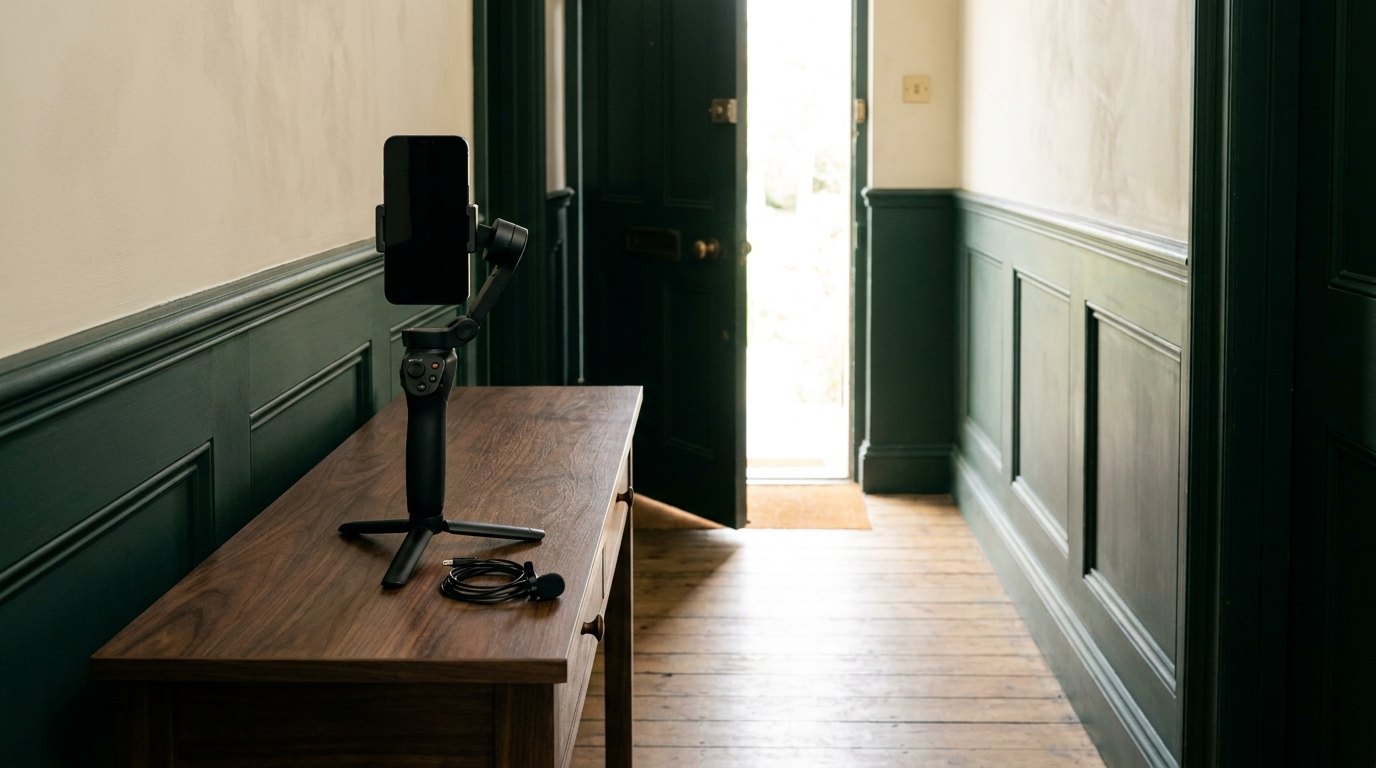
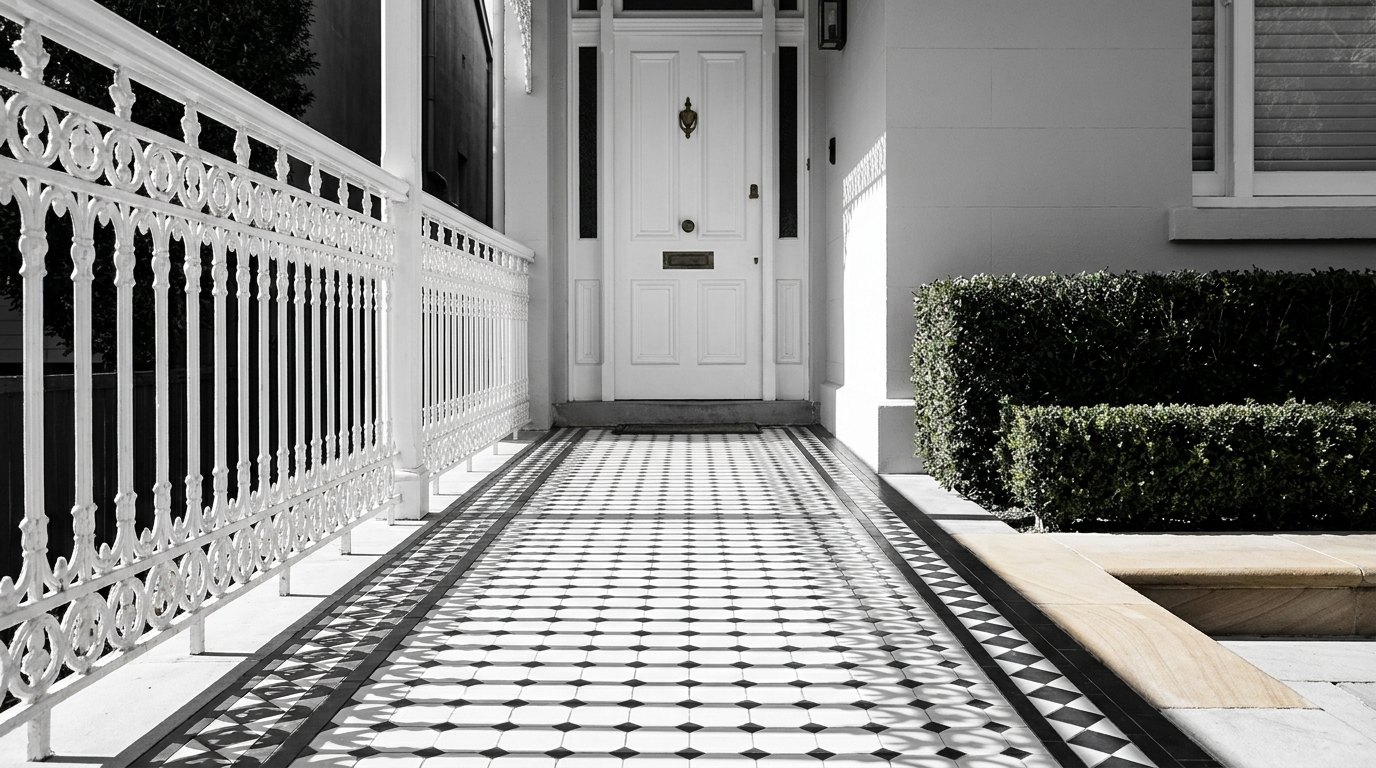
That is it. A hallway with a window at the end. A meeting room with the blinds up. The verandah of the listing you just photographed, shot before you unlock the door. A corner of your own lounge room with the lamp off and the curtains open.
The one thing that ruins most of them
Backlight. If the window is behind you, the camera exposes for the window and you become a silhouette. Turn ninety degrees so the light lands on your face and the room falls away behind you. That single change does more than any light you could buy.
Overhead downlights are the other trap. They drop shadows into your eye sockets and make everyone look tired. Kill them and use the window.
Sound is the part people notice
Viewers forgive average picture. They will not sit through bad audio for more than a couple of seconds, and they will not be able to tell you why they scrolled past.
Two fixes cover almost everything:
- Get a cheap clip-on microphone that plugs into your phone. It is the highest value purchase in this entire article.
- Film in a room with soft furnishings. Rugs, curtains and lounges absorb echo. Empty tiled rooms and stairwells bounce it straight back at you.
If you have no microphone, keep the phone close, about arm's length, and film indoors away from a road. Wind on a bare phone mic is unrecoverable in the edit.
Frame it like you would frame a listing photo
The same instincts that make a good room photo make a good piece to camera. Straight verticals. Camera at eye height, not resting on a desk pointing up your nose. Leave a little space above your head, not a swimming pool of ceiling.
Shoot vertical, and shoot it clean. Sit yourself slightly off centre with the room falling away over your shoulder for depth. If you think you might cut the same clip for a landscape use later, frame a bit wider and give yourself the room to crop.
Have something to say before you press record
Most agents freeze because they hit record with no plan and try to be interesting on the spot. Nobody is interesting on the spot. Decide the one thing you are saying, then say it in three beats:
- The hook. One sentence naming the thing your audience is worrying about.
- The substance. Two or three sentences of a real answer, with a specific detail in it.
- The landing. What you would do about it, or what you are seeing on the ground.
Formats that keep working
- The market read. What sold on the weekend in your patch, what it went for against expectations, and what that tells a vendor watching.
- The vendor question. Any question you answered twice this week is content. Whether to paint before listing. Whether to go to auction. What the marketing schedule actually buys.
- The walk and talk. Filmed at a listing before the open. One feature, one honest observation, thirty seconds.
- The correction. Something you used to believe about selling that turned out to be wrong. These land because almost nobody posts them.
Local specificity is your entire advantage over a national account with better production. Name the street. Name the block of units. Nobody else can.
If you are a lawyer, broker or adviser rather than an agent, swap the market read for the question a client asked you twice this week. The rest is identical.
Batch it or you will not do it
Filming one reel takes twenty minutes of faffing for forty seconds of usable footage. Filming six takes about an hour. The maths only works one way.
Pick a morning, wear something you would wear to an appraisal, and shoot the week or fortnight in one sitting. Change your jacket halfway through if you want them to look like separate days. Keep a running note on your phone of questions clients ask you, and pull your topics from that list instead of staring at the wall.
Then post them on a schedule you can actually hold. Two a week forever beats nine in a fortnight followed by a month of silence. The algorithm rewards showing up, and so do vendors, who are almost always watching you quietly for months before they ever call.
Where the polish should go
Self-shot content is meant to look self-shot. That is the point of it, and it is why it builds trust faster than anything you could produce for it. What it should never look like is careless.
Save the production budget for the work that carries the listing: the photography and video that sells the property itself. Your face to camera just needs to be well lit, audible and consistent. Those three things are free. For the listing walkthrough itself, the structure is in the agent-led walkthrough that does not feel cringe.
Start with one spot, one microphone and six topics. Film them this week. If you want a hand working out what to shoot yourself and what is worth putting a proper camera on, get in touch and we will map it out.

Harrison Macourt
Founder, Macourt Media
Photography, video and social content for Sydney agencies, brands and property teams since 2022. About Harrison.
Planning a shoot or a content month? Tell us what it is for and where it will run.