Why Floor Plans Sell Listings Faster
A good floor plan does what photos cannot: it shows how a home flows. Here is why Sydney buyers rely on them, 2D vs 3D, and what an accurate plan must include.
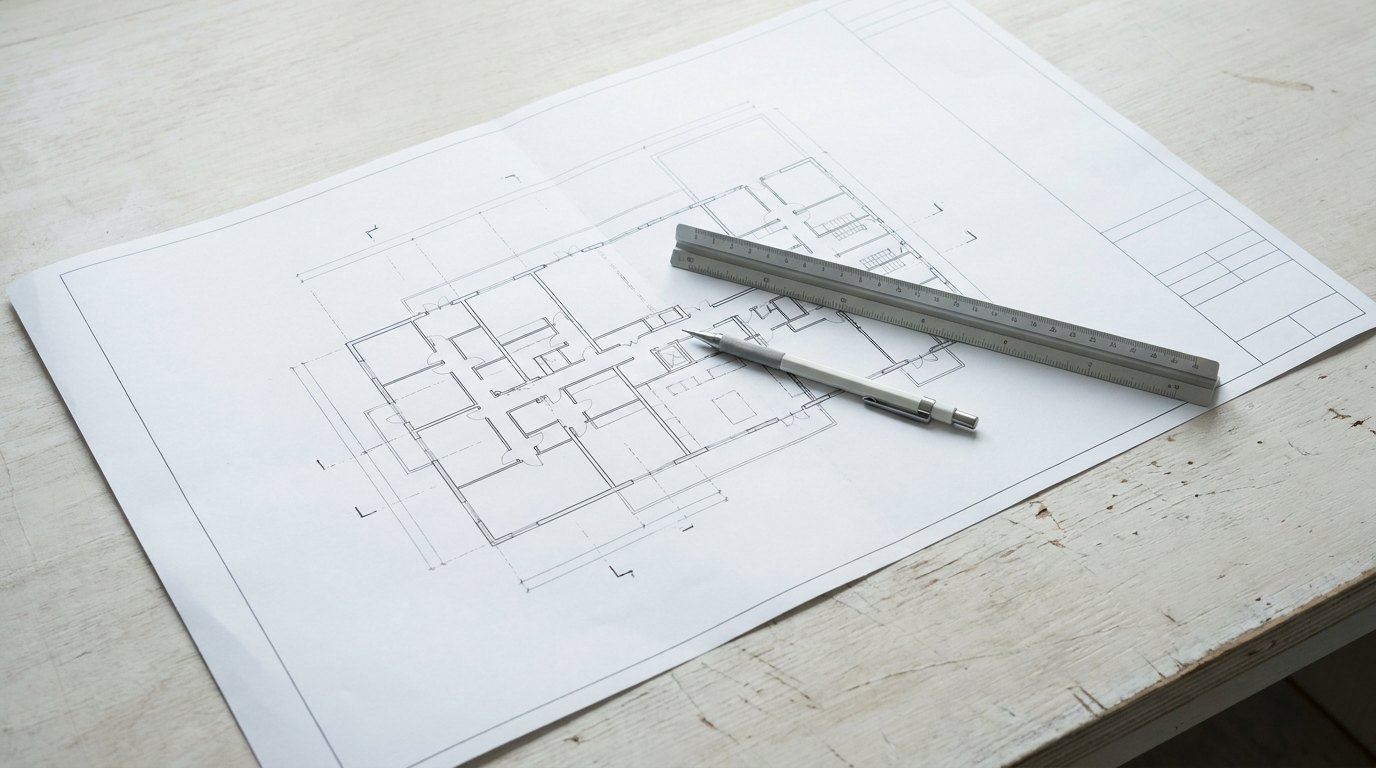
Photos sell the feeling of a home. A floor plan sells the logic of it. Buyers scroll a gallery to fall in love, then they open the floor plan to check whether the love is justified: does the layout work, is there room for the dining table, where do the kids sleep, can the study fit a desk. Skip the plan and you leave that question unanswered, and an unanswered question at the shortlist stage usually ends with a scroll to the next listing.
Agents sometimes treat the floor plan as an afterthought, the thing you tack on if the vendor asks. That is backwards. Across a portal full of near-identical galleries, the plan is often the piece of the ad that decides whether a buyer books the inspection or keeps scrolling. This is a guide to getting it right in a Sydney market where stock is quirky, blocks are tight, and buyers are ruthless with their Saturday mornings.
Why buyers actually use floor plans
Photos answer "do I like it." Floor plans answer "does it fit my life." Those are different questions, and serious buyers ask both before they give up a weekend to an inspection.
Here is what a buyer is really doing when they open the plan:
- Testing the layout against their life. Two kids, a home office, and a dog need a very different plan than a downsizing couple. The plan lets a buyer run that test in ten seconds, from the couch, before they waste anyone's time.
- Checking flow and privacy. Is the main bedroom next to the kids' rooms or tucked away from them. Does the bathroom open off the living space. Do you walk through a bedroom to reach the yard. Photos rarely reveal this. A plan makes it obvious.
- Working out furniture. Buyers mentally place their sofa, their bed, their dining setup. A plan with room dimensions turns that from guesswork into a decision.
- Understanding a tricky Sydney layout. Split levels, converted warehouses, terraces with rooms running front to back, apartments with unusual angles. These are exactly the homes where photos confuse and a plan clarifies.
The pattern holds across the market: the harder a home is to read from photos alone, the more the floor plan does the selling. A buyer who understands the layout arrives at the inspection already halfway sold. A buyer who is confused often does not arrive at all.
There is a filtering benefit too, and it works in the agent's favour. A clear plan sends the wrong-fit buyers away before they clog your open home, and it pulls the right-fit buyers in with confidence. Fewer tyre-kickers, more genuine interest. That is a better Saturday for everyone.
2D or 3D: which plan does the job
There are two main formats, and they solve different problems.
2D floor plans
The classic overhead line drawing. Walls, doors, windows, room labels, dimensions. It is the format buyers know how to read instantly and the one they trust most, because it shows the property honestly without dressing it up.
A 2D plan is the right default for almost every listing. It is fast to produce, clean on both the portal and the printed brochure, and unambiguous. When a buyer wants to know if their bed fits along the north wall, a 2D plan with dimensions answers in seconds. For the vast majority of Sydney houses, units, and terraces, a well-drawn 2D plan is all a listing needs.
3D floor plans
A rendered, dollhouse-style view with simple furniture, floor textures, and a sense of height. It looks impressive in the ad and helps buyers who struggle to read a flat drawing picture the space in three dimensions.
3D earns its place on specific listings: larger family homes where the sheer scale is a selling point, prestige campaigns where presentation is everything, and off-the-plan or vacant properties where furnished 3D rooms help a buyer imagine living there. The trade-off is that furniture and textures can flatter proportions, so a 3D plan should always be built on accurate measurements, not artistic licence.
Our honest recommendation for most Sydney agents: lead with a clean, accurate 2D plan on every listing, and add 3D only where the property or the campaign genuinely calls for it. Do not pay for a dollhouse render on a two-bedroom unit that a 2D plan describes perfectly.
Accuracy is the whole point
A floor plan is a promise about the property. Break that promise and you damage trust, and in some cases you create a real problem.
An inaccurate plan, a room drawn larger than it is, a wall in the wrong place, a dimension that does not match reality, gets found out fast. Buyers bring tape measures to inspections. Building inspectors and conveyancers check plans against the property. When the plan and the home disagree, the buyer stops trusting the whole campaign, not just the drawing. In Australia, misleading representations about a property carry consequences under consumer law, and a sloppy floor plan is an easy way to stumble into one without meaning to.
Accuracy protects everyone. It protects the vendor from a fallen-through sale, the agent from an awkward conversation, and the buyer from a nasty surprise at settlement. It is also simply better marketing. A plan that matches the property builds the confidence that gets offers over the line.
This is why measurement method matters. A plan sketched by eye or scaled off a phone photo will be wrong. A plan drawn from proper on-site measurement, taken during the same visit as the listing photos so nothing is missed, holds up to a tape measure. When we shoot a home, we measure it properly and draw the plan to match, which is the only version worth putting your name on.
The plans buyers ignore
Some floor plans do more harm than leaving the plan off entirely.
- Cramped plans with tiny, unreadable text.
- No dimensions, so the buyer learns nothing they could not already guess from the photos.
- Plans crammed with furniture symbols that hide the actual space.
- Plans that do not match what people see at the inspection. That one costs you trust, not just the plan.
If the plan is wrong or unreadable, buyers quietly discount it and move on. You paid for it and got nothing back. The fix is the checklist below.
What every floor plan should include
A good plan is complete without being cluttered. Here is the checklist we work to on every floor plan we produce.
The essentials, on every plan:
- Every room, clearly labelled. Bedroom, living, kitchen, bathroom, laundry, study. No mystery spaces.
- Room dimensions. Length by width for each room, so buyers can plan furniture. This is the single most-used feature on a plan, so never leave it off.
- Total internal area, in square metres, ideally with the land size or unit entitlement where relevant.
- A north point. Aspect drives light, and in Sydney a north-facing rear is a genuine selling feature. Show it.
- Doors and windows, drawn where they actually are. Buyers use these to understand light, flow, and where furniture can and cannot go.
- Level labels for multi-storey and split-level homes, so it is obvious which rooms sit where.
Include where they apply:
- Outdoor spaces: balconies, courtyards, decks, and the yard, with dimensions. In apartment-heavy Sydney, outdoor area is often the tiebreaker.
- Garage, carport, and storage, clearly marked. Parking is a headline feature in most of Sydney, so give it the space it deserves on the plan.
- Fixed features that affect layout: built-in robes, the island bench, the fireplace.
- A scale bar, so the plan reads correctly whether it is viewed on a phone or printed A4.
Keep it clean. A plan drowning in labels and clutter is as unhelpful as one missing dimensions. The goal is a document a buyer can absorb in one glance and return to when they are seriously considering an offer. Consistent line weights, a legible font, and a layout that matches your branding all make the plan feel like part of a considered campaign rather than a last-minute add-on.
The bottom line for Sydney agents
A floor plan is not paperwork. It is a working part of the ad that answers the questions photos cannot, filters out the wrong buyers, and gives the right ones the confidence to inspect and offer. Get the format right for the property, insist on accuracy, and include everything a buyer needs to picture their life in the home.
We include an accurate, cleanly drawn floor plan with the shoot, measured on site and delivered alongside your edited photos so the whole campaign lands together. If you want your next listing to give buyers both the feeling and the logic of the home, that is exactly where a good plan earns its keep.

Harrison Macourt
Founder, Macourt Media
Photography, video and social content for Sydney agencies, brands and property teams since 2022. About Harrison.
Related services
Planning a listing? Tell us the address and the launch date.