Personal Brand Video for Sydney Professionals: What One Half-Day Shoot Delivers
What a half-day personal brand video shoot looks like for a Sydney principal or adviser: what to prepare, what gets filmed and what you walk away with.
Most principals I talk to already know they should have proper video of themselves. The firm website still has a headshot from five years ago, the LinkedIn profile is a block of text, and the only footage of them on camera is a phone clip from a conference panel. They are not short of ideas. They are short of a clear picture of what a shoot actually involves and what comes out the other end.
So here is the plain version. What one half-day personal brand shoot looks like when we run it for a lawyer, adviser, broker or agency principal, and what you should expect to have in your hands afterwards.
Self-shot and a proper shoot do different jobs
I am a fan of filming yourself. We wrote a whole piece on personal brand reels without a studio, and for weekly market reads and quick answers to client questions, your phone is the right tool. It is fast, it is honest, and it keeps you showing up.
A half-day shoot is for the pieces that need to carry more weight. The film on your About page. The introduction a prospective client watches before the first meeting. The profile your team shares when you speak at an event. Those get watched closely by people deciding whether to trust you, so they deserve good light, clean sound and a proper edit. The two sit side by side. One does not replace the other.
What we sort out before the day
The shoot itself is the easy part. The prep is what makes a half-day feel unhurried instead of rushed.
A week or so out, we have a short call and agree three things:
- What the films are for. Website, LinkedIn, client onboarding, recruitment. Each one changes the length, the framing and the tone.
- The questions. We do not hand you a script. We send the interview questions ahead so you can think about your answers without memorising lines. People talk far better than they read.
- The location. Usually your own office, because it shows where clients will actually meet you. We ask for a quiet room with a window for the interview, plus a couple of spots for walking and working shots.
We also ask you to pick two outfits, avoid fine stripes and small checks that shimmer on camera, and block the morning in your calendar so nobody pulls you into a meeting halfway through.
How the half-day runs
Every shoot is a little different, but the shape is fairly steady.
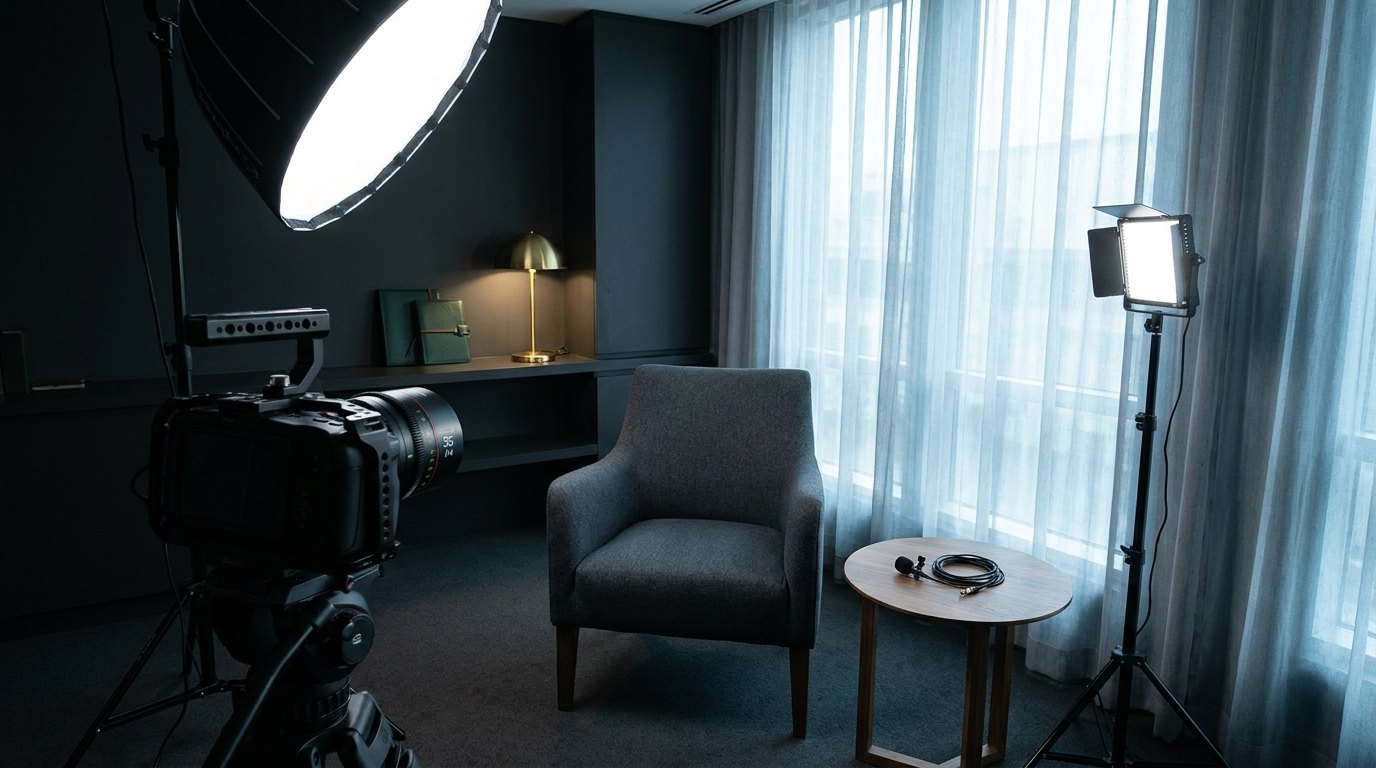
Setup. We arrive before you need to be in front of the camera. Lights, microphones and framing are sorted while you get on with your morning. You walk into a room that is ready.
The interview. This is the backbone of the shoot. You sit down, I ask the questions, and we talk. No autocue, no reading. If an answer comes out clumsy, we ask it again in a different way. Most people relax after the first few minutes and give their best answers in the second half.
Pieces to camera. A few short, direct lines delivered straight down the lens. These become the openers for social cutdowns and the hook at the start of a profile film.
Working footage. You with a client (a colleague standing in is fine), at the desk, walking through the office, talking with your team. This is the b-roll that lets an edit breathe so the whole film is not one talking head.
Stills. While the lights are up, we capture a set of portraits and environmental frames. It is the cheapest time to refresh your headshot, because everything is already in place.
What you walk away with
The deliverables are agreed before we book, so there are no surprises. A typical half-day gives you a mix like this:
- A finished profile film. The main piece, cut from the interview and working footage, built for your website and longer LinkedIn posts.
- Short cutdowns. Vertical edits pulled from the strongest answers, each one making a single point. These are what people actually watch on a phone.
- Stills. Portraits and in-office frames for your website, speaker bios, proposals and press.
- Subtitles and formats. Captions burned in or supplied as files, and exports sized for the platforms you use.
Video turnaround is agreed before the shoot, and you get a round of notes before anything is final.
What makes the difference on the day
After a lot of these shoots, the same few things separate a good result from a great one.
Know what you want people to understand about you, in one sentence. Not a slogan, just the honest version. The interview builds around it.
Bring real examples. A client problem you solved, anonymised if you need. The question new clients always ask. Specifics are what make someone sound credible rather than rehearsed.
Do not over prepare the words. The best answers come from people who know their subject and have thought about the question, not people who have learnt a paragraph by heart.
Where it fits in the bigger picture
For some people, a single half-day is the whole job. You get a profile film, a set of cutdowns and fresh stills, and you are covered for a good while. For firms that want a steady stream of new footage, the same shoot format becomes part of an ongoing media partnership, with a shoot in the diary on a regular rhythm.
Either way, the starting point is the same. If you want to see how a brand video shoot would work for you or your firm, get in touch and we will map out the half-day with you. We work with firms and professionals across the Inner West, Eastern Suburbs and Lower North Shore.

Harrison Macourt
Founder, Macourt Media
Photography, video and social content for Sydney agencies, brands and property teams since 2022. About Harrison.
Related services
Planning a shoot or a content month? Tell us what it is for and where it will run.