Drone Stills vs a Full Aerial Package for Sydney Listings
Most listings need a few strong aerial stills, not a drone film. How to tell which campaigns earn the full aerial package and which do not.
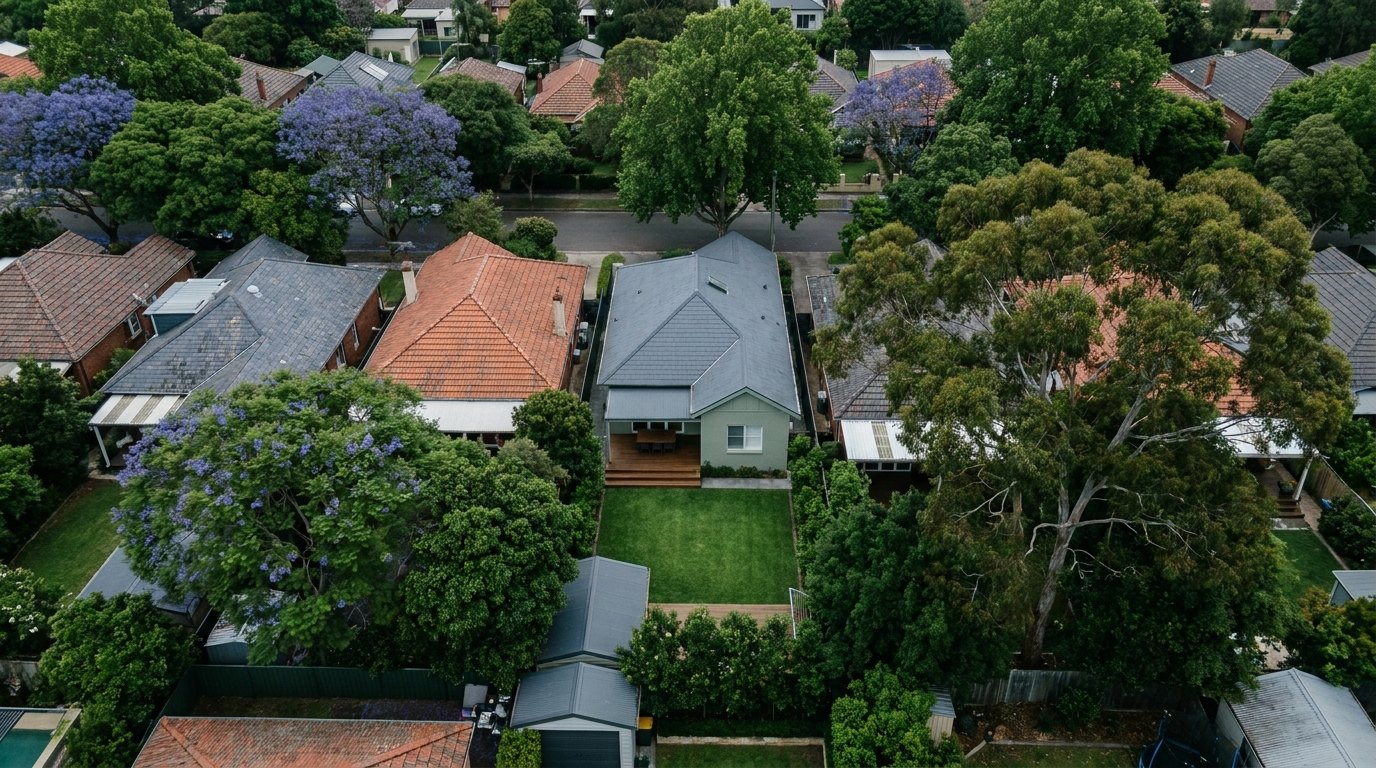
Most drone requests start the same way. An agent rings, runs through the shot list, and says "and can we add drone?" Fair question, but it skips the useful one, which is what kind of drone. A handful of aerial stills and a full aerial package with video are different jobs. They take different time in the air, they need different conditions, and they solve different problems for the campaign.
Pick wrong and one of two things happens. The vendor pays for an aerial film that has nowhere to live, or a block that deserved movement gets one flat overhead and a roof. Here is how we help agents make the call.
What drone stills actually give you
A stills flight is short and targeted. We go up, get the three to six frames that answer the questions a ground shot cannot, and come down. Usually that means some mix of the elevated front-on, the block, and the position shot showing what is around the home. If you want the detail on each of those frames, our piece on what drone shots actually sell a listing walks through them one by one.
The big advantage of stills is reach. An aerial still works on the portal, in the brochure, on the signboard, in the letterbox drop and as a social tile. It sits in the same gallery as the ground photos and gets edited to match them, so the campaign looks like one shoot, not two.
For a lot of listings, that is the whole job done.
What a full aerial package adds
The package is stills plus aerial video. That means slow reveals over the roofline, an orbit around the block, a push along the street toward the park or the village, all shot in 4K and graded to sit inside the rest of the campaign. Those clips become the opening of the listing film, the transitions between rooms, or short standalone pieces cut for social.
It is a bigger flight. Video needs more time in the air, steadier wind, and more planning around neighbours, people on the footpath and airspace. It also needs a reason to exist. Aerial footage only earns its keep when there is a listing video or a social plan that will actually use it.
When stills are enough
Be honest about the property. Stills will cover it when:
- It is a standard freestanding home on a regular block. The aerial job is to show the roof, the yard and the street in one frame. Three good stills do that cleanly.
- It is a terrace or a semi. On a narrow block the useful aerial is often a single elevated front-on. Flying video over a strip of roofs adds nothing a buyer will remember.
- There is no listing video in the campaign. Aerial video without a film to drop into is footage looking for a home. Spend that money on the ground shoot instead.
- The timeline is tight. A stills flight fits around inspections and a busy launch week far more easily than a full aerial session.
When the full package earns its money
The package makes sense when movement explains something a still cannot:
- The position is the headline. A Drummoyne or Balmain home a street back from the water, a Mosman house that backs onto a reserve. A still shows it. A slow pull back from the front door to the reserve makes the buyer feel the walk.
- The block is big, odd or layered. Dual frontage, a pool and a studio out the back, a long battle-axe driveway. An orbit explains the layout in seconds where five stills leave buyers piecing it together.
- You are already running a cinematic listing film. Aerials give the film its opening and its rhythm. Without them, a premium edit often starts on a front door and stays indoors the whole time. Our notes on listing video length cover how those clips fit into a tight cut.
- The vendor is watching the campaign closely. On a prestige listing, aerial movement is often what tells a vendor the marketing spend is working as hard as they are paying for.
How to brief the flight either way
Whatever you book, a good brief makes the aerial better. Four things help us most:
- Tell us what the aerial needs to prove. Land size, the walk to the park, the outlook, a quiet street. One clear job beats a vague "get some drone".
- Tell us what to keep out. A main road, a rail corridor, a tired roof, solar panels facing the street. We will frame around them rather than gift the buyer a reason to hesitate.
- Say on the booking if video might be used. Even if you are only leaning that way, it changes how we plan the flight, the height and the time on site.
- Give us the address early. Some addresses in our patch sit close to controlled airspace, so we check every one before we confirm. The drone rules explainer covers what that involves.
Weather has the final say. Wind and rain ground the drone, and when that happens we reschedule the aerial part rather than fly a compromised shot.
The short version
Stills are the default. They cover most homes, they work in every channel, and they fit any timeline. The full aerial package is for listings where position, land or a premium film make movement worth paying for, and where someone has already decided how that footage will be used.
We fly listings across the Inner West, Eastern Suburbs and Lower North Shore, and our drone photography and video page shows what each flight includes. If you are weighing it up for a campaign, send through the address and what the aerial needs to say. Get in touch and we will tell you straight which one the property needs.

Harrison Macourt
Founder, Macourt Media
Photography, video and social content for Sydney agencies, brands and property teams since 2022. About Harrison.
Planning a listing? Tell us the address and the launch date.